
Toronto’s Princess Margaret Hospital recently received a $100-million donation as part of a $2.5-billion fundraising campaign to “create a world free from the fear of cancer.” As we head into end-of-year philanthropic giving season, it’s worth unpacking the connection between a remarkable private gift to one of the world’s best cancer hospitals at home and the paucity of public resources for the health of countless millions of people far away.
Those who could benefit from Princess Margaret’s cutting-edge, live-saving care — or have access to something similar where they live — are socialized to see such a donation as an incredible expression of generosity for a mission beyond reproach. Which it undoubtedly is.
The overwhelming majority of the world that doesn’t have access to such a facility would see it differently.
They would be equally justified, because that single philanthropic gift is more than the annual health budget of dozens of countries not just for cancer, but for everything they need to do related to health.
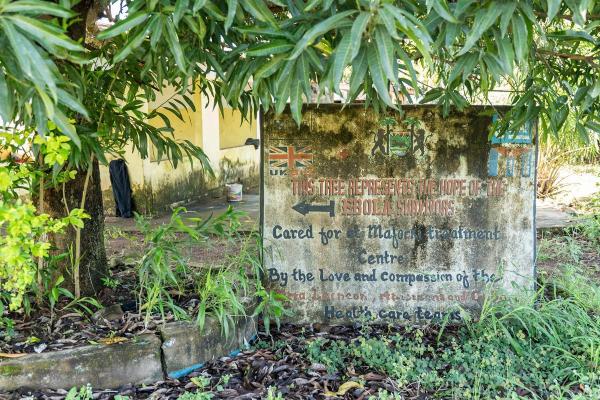
Consider Liberia in West Africa, which in 2023 spent about $80-million from government domestic resources on health for a population of 5.5 million. Or Sierra Leone next door, whose weak health system was similarly decimated by civil war and the 2014-16 Ebola epidemic: $72-million on health for 8.5 million people. Haiti’s comparable figure was $83-million for 11.6 million people.
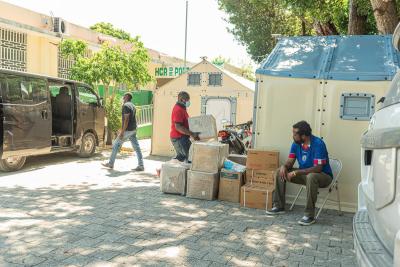
Haiti, September 2021: In response to the August 14th earthquake, Zanmi Lasante (PIH in Haiti) sent multiple medical teams and mobile clinics to the affected areas to support the victims. Dr. Sinal Bertrand coordinated the work of our medical staff in hospitals, health centers and communities in collaboration with medical and departmental leadership.
Frederique Montas / PIH
Canada’s per capita government health spending is about $6,800. In 2023, Liberia was the best of the above trio at $15.
If we truly believe in health as a human right – not just for ourselves, but for all humans – what are we to make of such outrageous disparities?
One option is to claim they’re unrelated. We can say what happens in poor countries is not our responsibility. We can insist their challenges are due to corruption, or that there’s little we can do to change things when Canada’s outward gaze is focused on addressing our own economic challenges.
Alternatively, we could realize that philanthropy and our response to global inequality are both expressions of our values and ambitions. When we influence the direction of Canadian healthcare through our political and policy and philanthropic choices, we can use the same levers to make decisions that advance the right to health for people we’ll never meet.
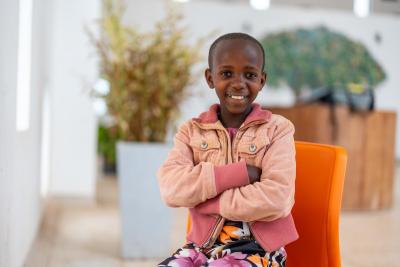
10-year-old Sanyu Blessing after being discharged from the Butaro Cancer Center of Excellence. Her health journey began in 2019 at the University Teaching Hospital of Kigali (CHUK), where doctors discovered a kidney tumor, and continued at the Butaro Cancer Center of Excellence, where she underwent surgery and chemotherapy. Today, she celebrates a full recovery. Asher Habinshuti / PIH
Of course corruption is a factor in poor countries – just as it is in the White House and the Toronto police department. History is also a factor. We talk a lot less about the generational consequences of tariffs and reparations meant to punish Haiti, for example, for being the first independent Black republic in 1804. We don’t discuss the impact of ongoing unfair global taxation regimes that global south countries had no say in building, or ongoing structural adjustment programs that limit public sector spending on health and education, or vulture funds in North America and Europe that cynically profit from global south debt burdens.
We can also push back against those who would claim the problem is too hard. One way to think about global health progress is through 3Ds: discovery, development, and delivery. Scientific discoveries have led to the development of medicines and health technologies that have saved countless lives. Where we’ve failed is on delivery: not ensuring the benefits of discoveries and development are delivered to people who need them most. We won’t see a world free from the fear of cancer unless the world puts more resources towards better delivery of what we already know how to do.
We can choose how to step up for others while we also step up for ourselves, individually and collectively. UK Prime Minister Andy Burnham, for example, has said he will make African debt relief a priority of his government. Canada has a proud history of using our aid investments to advance maternal, child, and reproductive health as one of our responses to inequality. With Canadian aid at less than one-third of one percent of our gross national income, we can and should be similarly ambitious again instead of cutting foreign assistance further.
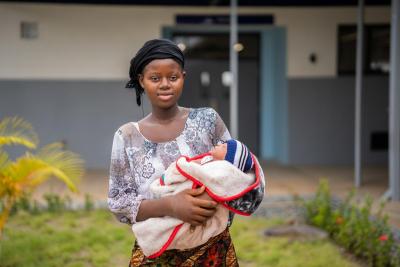
After receiving lifesaving emergency care at the Maternal Center of Excellence, 18-year-old first-time mother Fatmata Kamara returns home to Makeni with her healthy baby boy. Admitted in critical condition with severe anemia, severe pre-eclampsia, and life-threatening fluid in her lungs, Fatmata was stabilized before undergoing an emergency Caesarean section that saved both her life and her baby’s. Today, mother and child leave the hospital healthy together. This is testament to timely, specialized maternal care and the dedication of the clinical team that helped give them a second chance.
Two decades ago, Sierra Leone had the highest maternal mortality in the world. It has since decreased that figure by 79 percent – and Canadian public sector and philanthropic investments alongside Sierra Leonean leadership had a role in that success.
Global health philanthropy works wonders when it’s used to support locally-driven priorities. The same goes for aid. Down the street or around the world, a belief in what is possible and smart investments in stronger health systems always pay dividends. We only need the will to make it happen.