
The following photos and story are by Thomas Patterson, PIH photo editor.
“The government needs the helicopter,” Partners In Health (PIH) Lesotho Communications Officer Mpho Marole said, “so we’re driving there instead.”
For cross-country journeys, sometimes there’s a spare seat or two on a government helicopter heading over the Maloti Mountains to the remote villages of eastern Lesotho, but during the week in August when I was there, it was being used for training.
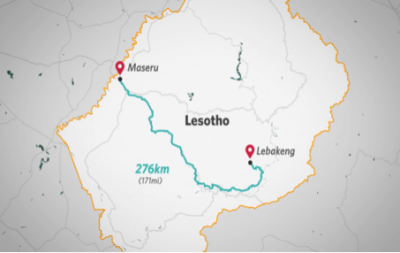
More often, PIH drivers take clinicians and other staff members on this trek. So, dark-and-early one morning, Marole, PIH Lesotho Chief Medical Officer Dr. Afom Andom, PIH Lesotho Director of Policy and Partnerships Danielle Sharp, Videographer Caitlin Kleiboer, Driver Matlosa Phakisi, and I piled into a PIH truck and headed east out of the capital, Maseru, up into the mountains on one of the country’s few paved highways.
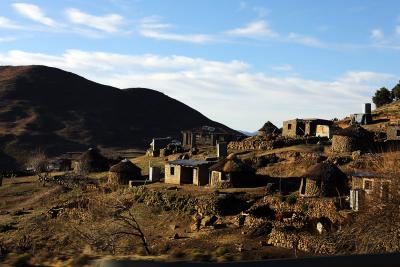
Lesotho is a small, landlocked country surrounded by South Africa, with a population of about 2.2 million. Our destination, PIH-supported Lebakeng Health Center, is only 130 or so miles away as the crow flies. But due to winding, washed out, boulder-strewn mountain roads, and the unpredictable nature of waiting for a hand-rowed ferry across the Senqu River, we expected the journey to take four or five hours. Lebakeng Health Center is one of seven small but vital sites offering comprehensive health care in a joint program with Lesotho’s Ministry of Health called the Rural Health Initiative.
Our first pit stop was at a lodge in Semonkong, in the center of the country, high in the mountains. Semonkong means “site of smoke” in Sesotho, the local language, deriving its name from the mist of the famous Maletsunyane Falls nearby. Unfortunately, viewing the waterfall itself requires a half-hour hike from the lodge, and we were in such a hurry to cross the country with enough light left in the day that we had no time for tourism. As Lesotho is in the Southern Hemisphere, August days are rather short.
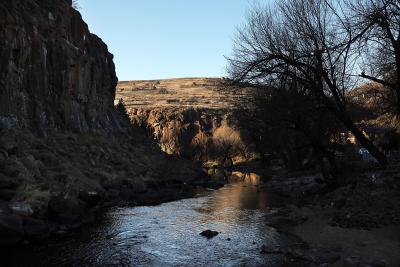
The Maletsunyane River at Semonkong, above Maletsunyane Falls.
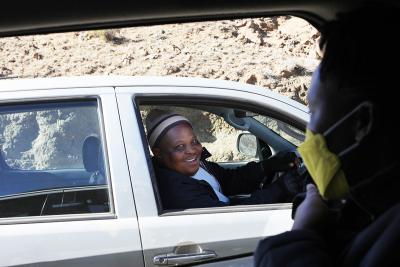
Heading back down the mountain from Lebakeng, PIH Driver Tumisang Lekobane pulls over to let our vehicle pass.
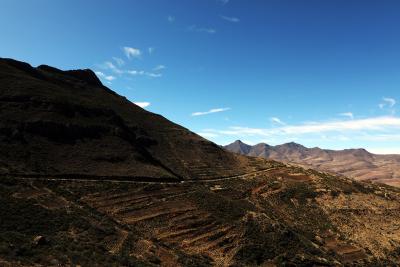
The journey includes this mountainside road near the Senqu River.
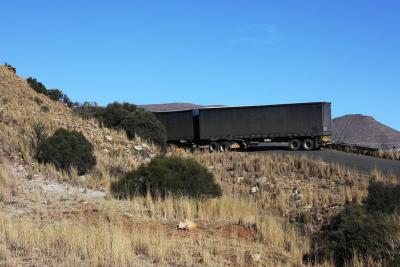
A jack-knifed truck completely blocks the highway on a hairpin turn, which required some tricky off-roading to continue on our way.
After an hours-long final stretch over rock-strewn, deeply rutted roads, we reached the Senqu River. On the shore we met Mahase, a PIH employee, who helped us into his boat and rowed us to the other side, as he did all travelers who sought health care at Lebakeng Health Center.
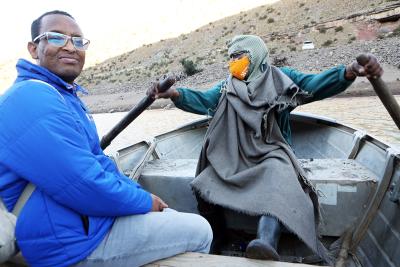
Wearing a PIH mask, Mahase rows Andom across the Senqu River.
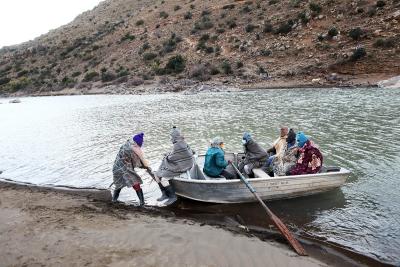
A PIH-supported boat ride over the Senqu River.
From there, a steep hike up out of the canyon and onto a narrow ridge where the health center and adjoining airstrip lay.
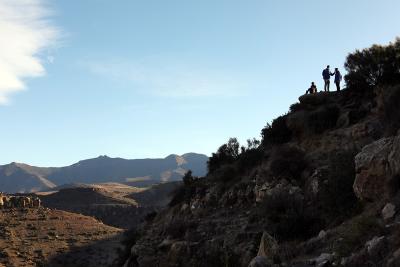
Andom and Kleiboer on the hike up to Lebakeng.
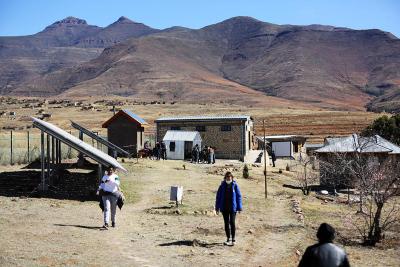
An array of ground-mount solar panels provide power to Lebakeng Health Center
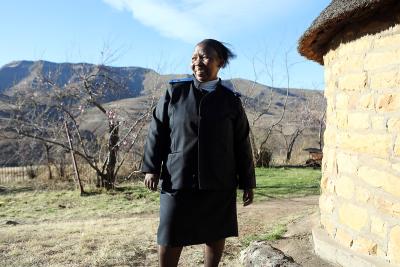
Nurse-in-charge Maleshoane Seleke.
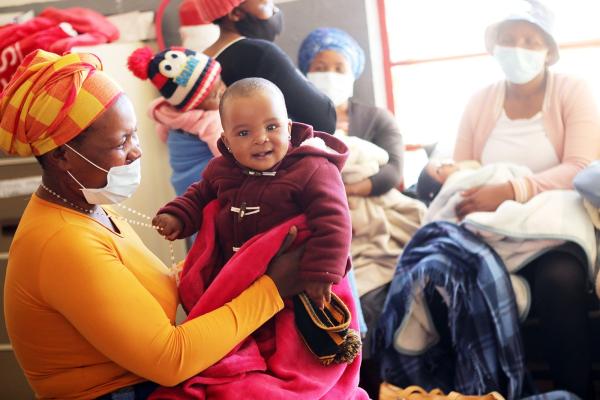
All told, our journey from Maseru to Lebakeng Health Center took more than seven-and-a-half hours. Whereas we had (mostly) motorized transportation to take us to Lebakeng, many of the patients we met there were mothers who had also spent hours traveling that morning, but on their own two feet, babies on backs, to get pediatric checkups for their children.
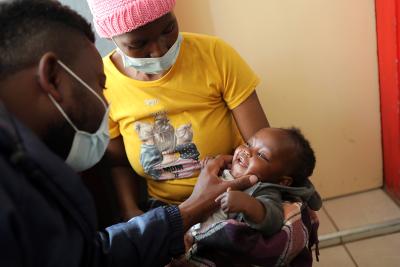
Nurse Mohlomi Maputle conducts a pediatric checkup
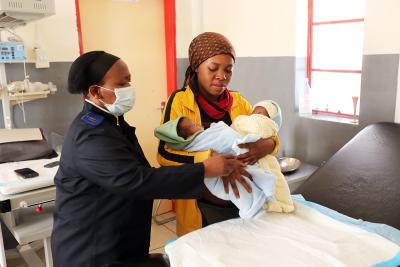
Nurse-in-charge Maleshoane Seleke conducts a pediatric checkup for Mohliehi Mohlalisi’s twin babies.
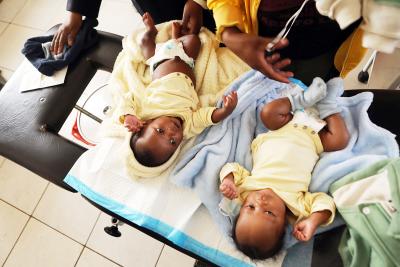
Other people had traveled a long way to access health care at Lebakeng as well, for a variety of needs. In an area of rural Lesotho that truly feels like a medical desert, Lebakeng Health Center provides an oasis, a small community of accompaniment, with services from obstetrics to radiology, all in one place.
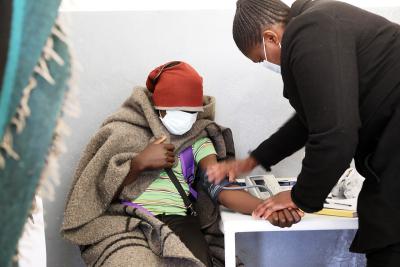
L. Majake, an 18-year-old herder, gets an HIV test and a medical checkup before attending school.
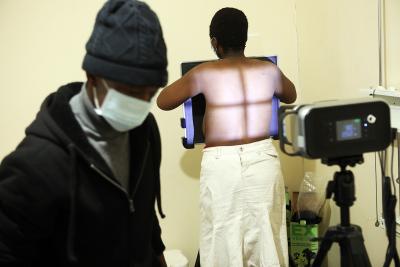
Tsepo Tamorene helps a patient receive an x-ray with the new portable machine at Lebakeng.
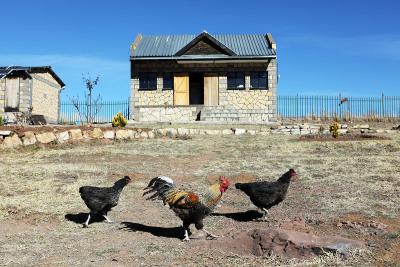
Chickens walk the grounds at Lebakeng.
After a long afternoon meeting with patients and the clinicians serving them, we hiked down the hill, rowed back over the river and drove to the border town of Qacha’s Nek to spend the night. The next day we drove a few hours to Nkau Health Center, another clinic in the Rural Health Initiative.
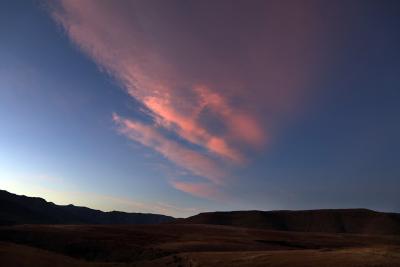
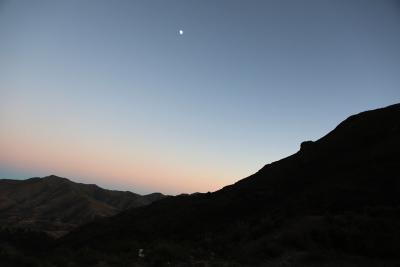
Sunset clouds over the Senqu River canyon at dusk.